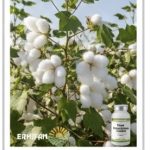
The blistering heat of the Punjab and Sindh belts isn’t just a weather report—it’s a direct threat to the backbone of Pakistan’s economy. When the mercury crosses 45°C, the cotton plant effectively stops breathing. Bolls drop, fiber quality degrades, and your profit margins evaporate. But what if the solution wasn’t just more water, but a precision-engineered mineral that works at the molecular level?
Protecting Pakistan’s Cotton Crop from Heat Stress using Nano-Potassium
what will you read...
The Heat Crisis: Why Traditional Cotton Farming is Hitting a WallEnter Nano-Potassium: The Molecular Shield for Your CropThe Science of Resilience: How Nano-Potassium Stops Boll SheddingCase Study: Multan’s Battle Against the 48°C CeilingScaling for Export: Why B2B Buyers Demand Nano-Treated CottonAdmitting the Flaw: The Transparency of Nano-TechImplementing the Future: Your Steps to Heat-Resistant FarmingSummaryFrequently Asked Questions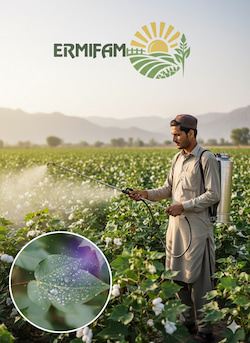
The Heat Crisis: Why Traditional Cotton Farming is Hitting a Wall
For decades, cotton farming in Pakistan has relied on heavy doses of granular fertilizers. While essential, their efficiency is plummeting. In extreme heat, the soil becomes a hostile environment where traditional granules struggle to dissolve and reach the roots in time. The plant enters a “survival mode,” closing its stomata to save water. This stops the natural cooling process and leads to “boll shedding.”
This isn’t just a biological failure; it’s a financial one. When you invest in high-quality seeds only to lose 30% of your yield to a heatwave, the financial hit is devastating. The reality is that climate change has outpaced traditional chemistry. We need a nutrient delivery system that works faster than the sun can burn.
Enter Nano-Potassium: The Molecular Shield for Your Crop
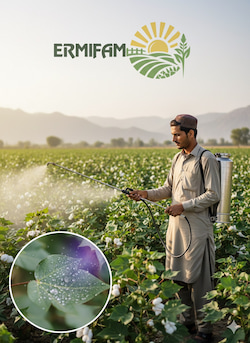
Nano Potassium fertilizer is not just “smaller fertilizer.” It is a revolution in nutrient delivery. By reducing potassium particles to the nanoscale, we increase the surface area exponentially. This allows the plant to absorb the nutrient through the leaves (foliar) with nearly 90% efficiency, compared to the 20-30% efficiency of bulk fertilizers.
Think of it as the difference between trying to hydrate by taking a bath versus drinking a glass of water. Nano-Potassium penetrates plant cell walls instantly, regulating osmotic pressure. This ensures that even when the sun is at its peak, the cotton plant remains cool without dehydrating. It is the ultimate climate-insurance policy for any business looking to secure their supply chain.
The Science of Resilience: How Nano-Potassium Stops Boll Shedding
In the field, the sight of “white gold” rotting on the ground is the ultimate sign of failure. Heat stress triggers the production of ethylene, the hormone that tells the plant to drop its bolls to save itself. Potassium is the natural antagonist to this process.
By maintaining high internal levels of Potassium ions, the plant can manage its stomatal conductance. Scientifically, potassium regulates the opening and closing of the microscopic pores on the leaves. During a heatwave, Nano-Potassium ensures the plant doesn’t “panic.” It maintains the turgor pressure within the cells, keeping the stalks upright and the bolls attached.
Case Study: Multan’s Battle Against the 48°C Ceiling
To understand the real-world impact, we look at a study conducted in the Multan region, one of Pakistan’s most intense heat zones. A comparison was made between a Conventional Group (using standard MOP/SOP) and a Nano-Enhanced Group (using foliar Nano-Potassium). Despite a 46°C heat spike, the results were definitive:
| Metric | Traditional Potash | Nano-Potassium Supplement | Improvement |
|---|---|---|---|
| Boll Shedding Rate | 68% | 43% | -25% Reduction |
| Seed Cotton Yield | 2,118 kg/ha | 3,175 kg/ha | +49.9% Increase |
| Bolls per Plant | 96 | 139 | +44.7% Increase |
Scaling for Export: Why B2B Buyers Demand Nano-Treated Cotton
If you are in the business of exporting cotton, consistency is your currency. International buyers are increasingly looking at the sustainability and efficiency of their suppliers. Traditional fertilizer runoff is a major pollutant, but Nano-Potassium offers a cleaner alternative.
Heat stress management via nanotechnology produces a more resilient fiber while using a fraction of the chemical volume. This reduces the “Chemical Footprint” of your cotton. When you pitch to a B2B client, you aren’t just selling cotton; you are selling a technologically advanced, sustainably grown product.
Admitting the Flaw: The Transparency of Nano-Tech
We must be honest: Nano-Potassium isn’t a “magic wand.” If your soil is completely depleted of organic matter or if irrigation is totally absent, technology alone cannot save the harvest. It requires a baseline of good farming practices. Furthermore, the initial cost per liter appears higher than a bag of raw potash.
However, the value lies in the results. You use less, you lose less, and you gain more. You are paying for active, energized molecules. It’s an investment that pays back in the form of yield stability and fiber strength.
Implementing the Future: Your Steps to Heat-Resistant Farming
To protect your cotton, timing is everything. The first application should occur at the “Square” stage, followed by a second application at “Peak Bloom.” This prepares the plant’s internal “cooling system” before the most intense heat hits.
For exporters, recommending this to your contract growers is a vital risk management strategy. By providing Nano-Potassium to your network, you ensure that your export commitments are met, regardless of the unpredictable Pakistani summer.
Summary
This article explores how Nano Potassium fertilizer serves as a critical defense mechanism against heat stress management in cotton farming in Pakistan. By leveraging nanotechnology, farmers can improve nutrient uptake, reduce boll shedding, and ensure export-quality yields even in temperatures exceeding 45°C.
Frequently Asked Questions
- How is Nano-Potassium different? It has particles less than 100nm, allowing 90% absorption compared to 20% in traditional forms.
- Is it compatible with pesticides? Yes, it can be integrated into most existing spray schedules.
- Does it save water? It helps the plant use water more efficiently by regulating its pores during heat.
- Is it eco-friendly? Yes, it reduces chemical leaching into groundwater.
- When to apply? Apply during the squaring and flowering stages for maximum protection.
You can contact us to buy and sell this product
Sales consultant
Ways of communication:
 |
09120565945 |
 |
Click |