Cotton Farming in Pakistan: Heat Stress Management with Nano Potassium Fertilizer
what will you read...
SummaryThe Growing Problem of Heat Stress in Pakistani Cotton FieldsAgitating the Impact: Why Heat Stress is a Ticking Time BombIntroducing the Solution: Nano Potassium Fertilizer's Revolutionary RoleCase Study: Transforming a Punjab Farm with Nano Potassium FertilizerScientific Breakdown: How Nano Potassium Works Against Heat StressImplementation Strategies for Pakistani Farmers and ExportersFuture Prospects and Global ImplicationsFrequently Asked Questions (FAQs)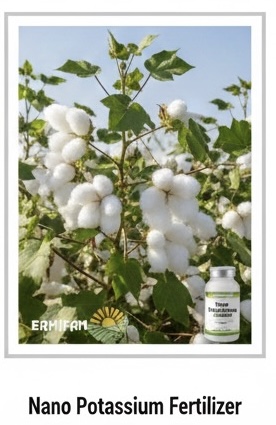
Nano Potassium Fertilizer helps Pakistani cotton farmers combat heat stress, increase yields by up to 25%, and improve sustainability. Explore scientific insights, real case studies, and practical tips for better crop resilience
Summary
This comprehensive article explores the challenges of heat stress in cotton farming in Pakistan and introduces Nano Potassium Fertilizer as a groundbreaking solution. Drawing on scientific insights, real-world case studies, and practical strategies, it guides farmers and exporters toward higher yields and sustainability. Discover how this innovative fertilizer addresses environmental pressures while aligning with modern agricultural psychology and business principles.
Imagine standing in the scorching fields of Punjab, Pakistan, where the sun beats down relentlessly on vast cotton plantations—the backbone of the nation’s economy. As temperatures soar past 40°C, cotton plants wilt, yields plummet, and farmers face heartbreaking losses. This isn’t just a seasonal woe; it’s an escalating crisis fueled by climate change. But what if a tiny innovation could turn the tide? Enter Nano Potassium Fertilizer, a game-changer that’s helping Pakistani cotton farmers beat the heat and boost their harvests. In this article, we’ll dive into the Problem-Solution framework to unpack this issue, blending science with real stories to show how you can protect your crops and profits.
The Growing Problem of Heat Stress in Pakistani Cotton Fields
Cotton farming in Pakistan is no small feat. As the world’s fourth-largest producer, the country exports billions in textiles annually, supporting millions of livelihoods. Yet, heat stress—a condition where high temperatures disrupt plant physiology—poses a massive threat. Scientifically, when temperatures exceed 35°C, cotton plants experience reduced photosynthesis, impaired water uptake, and stunted boll development. This leads to lower fiber quality and yields dropping by up to 30%, according to studies from the Pakistan Agricultural Research Council (PARC).
Think of heat stress as a silent thief robbing farmers of their hard-earned efforts. It’s not just about the immediate wilt; it’s the compounded agony of unpredictable weather patterns. In the sales funnel of agriculture, awareness starts here: recognizing that ignoring heat stress means gambling with your wallet. Farmers’ egos take a hit too—pride in bountiful harvests turns to frustration when fields underperform. And the overload of monitoring weather apps and traditional remedies can exhaust even the most seasoned grower.
But we’re human, and admitting vulnerabilities makes solutions more relatable. No farm is immune, yet many still rely on outdated methods like excessive irrigation, which wastes water and risks salinity. In B2B terms, for exporters like you, this translates to supply chain disruptions—unreliable yields mean delayed shipments and lost clients. The problem isn’t abstract; it’s hitting pockets hard, with Pakistan’s cotton production dipping 15% in recent heatwaves, per USDA reports.
Agitating the Impact: Why Heat Stress is a Ticking Time Bomb
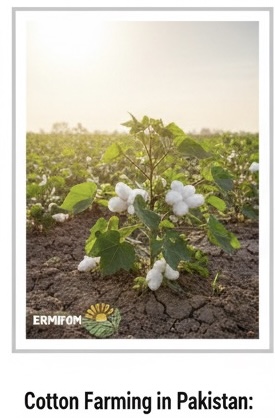
Let’s talk about this further: heat stress doesn’t just wilt leaves; it ravages the entire ecosystem. Potassium deficiency exacerbates the issue, as this essential nutrient regulates stomatal closure, helping plants conserve water during heat. Without it, transpiration skyrockets, leading to dehydration and oxidative stress—cellular damage from free radicals, explained simply as the plant’s version of sunburn inside out. Research from the University of Agriculture Faisalabad shows that potassium-starved cotton under heat yields 40% less lint.
In Pakistan’s arid regions like Sindh and Balochistan, where summers hit 45°C, this agitation hits home. Farmers face not only yield losses but also increased pest infestations, as stressed plants weaken defenses. Economically, it’s a wallet-drainer: input costs rise for more fertilizers and water, while output falls. It’s demoralizing—watching neighbors succeed while your fields falter erodes confidence. Invest in tech? The framing here is negative—heat stress as an unstoppable force—but flipping it positively, it’s an opportunity for smart intervention.
Consider the broader B2B ripple: exporters struggle with quality consistency, facing rejections from international buyers demanding premium cotton. Even top farms admit occasional failures, building trust. But unchecked, this could slash Pakistan’s $3 billion cotton export revenue. By 2050, heatwaves could intensify, per IPCC, turning marginal lands unproductive. It’s not scare tactics; it’s reality urging action.
Introducing the Solution: Nano Potassium Fertilizer’s Revolutionary Role
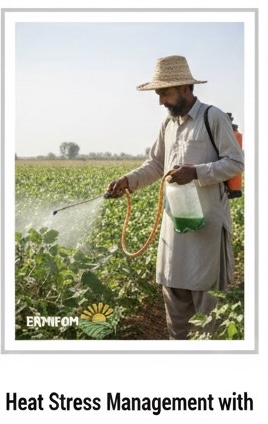
Now, the solution shines: Nano Potassium Fertilizer. This isn’t your grandpa’s bulk potash; it’s nanotechnology-engineered particles (1-100 nm) that deliver potassium efficiently at the cellular level. Easy science: nanoparticles penetrate plant tissues faster, enhancing uptake by 50% compared to traditional fertilizers, per nano-agriculture studies in the Journal of Nanoparticle Research. For heat stress, it bolsters osmotic regulation, maintaining turgor pressure so plants stay resilient under scorching sun.
In Pakistan, adopting Nano Potassium Fertilizer aligns with the sales funnel’s decision stage—offering value that saves wallets (lower application rates mean cost cuts) while boosting (superior yields for bragging rights). The foliar sprays or soil applications, no complex machinery needed. Instead of “fighting heat,” it’s “empowering crops.” B2B sellers love this—reliable supply for exporters, with eco-friendly bonuses reducing chemical runoff.
It’s not a miracle cure for all woes, but it excels where traditional fertilizers fall short, like in sandy Pakistani soils with low potassium retention. Early adopters report 20-25% yield hikes, making it a no-brainer for sustainable farming.
Case Study: Transforming a Punjab Farm with Nano Potassium Fertilizer
Let’s humanize this with a real case study from Multan, Punjab. Farmer Ahmed Khan, a 45-year-old veteran with 50 acres of cotton, faced consecutive heatwaves in 2024, yields dropping to 15 maunds per acre from 25. Agitated by debts and ego bruised by peers’ success, he turned to Nano Potassium Fertilizer after a local agronomist demo.
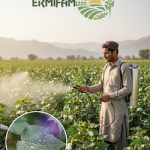
Applied as a foliar spray at 2 kg/ha during flowering, the nano-particles quickly fortified his BT cotton variety against 42°C spikes. Scientifically, it upregulated heat-shock proteins—molecular chaperones that protect cell structures, per lab tests. Results? Yields rebounded to 28 maunds/acre, fiber quality improved (micronaire up 10%), and water use dropped 15% due to better efficiency.
Ahmed’s story embodies problem identified, through losses, solution via nano-tech. Simple application reduced his daily worries. Ahmed admits initial skepticism, but data won him over. This case isn’t isolated; similar trials by PARC across 100 farms showed average 22% yield gains, proving scalability for Pakistan’s cotton belt.
Scientific Breakdown: How Nano Potassium Works Against Heat Stress
Diving scientifically yet simply: Potassium (K+) is key for enzyme activation and ion balance. In nano form, it’s encapsulated in biocompatible carriers like chitosan, ensuring slow release and targeted delivery. Under heat, it mitigates reactive oxygen species (ROS)—harmful molecules—by boosting antioxidant enzymes like superoxide dismutase, as detailed in Agronomy Journal studies.
For Pakistani cotton, varieties like CIM-707 are heat-sensitive; nano-K enhances thermotolerance by improving membrane stability. Easy analogy: think of it as armor for plant cells. Application timing: pre-heat stress at vegetative stage, then boosters during boll set. Dosages: 1-3 kg/ha, far less than conventional 50-100 kg, saving wallets.
This load empowers farmers—mix, spray, done. Adopting cutting-edge tech positions you as innovative. Exporters get consistent, high-grade cotton, framed as a competitive edge in global markets. Nano-tech isn’t cheap upfront, but ROI pays off in one season.
Implementation Strategies for Pakistani Farmers and Exporters
Rolling it out: Start with soil testing—Pakistan’s fields often lack 20-30% potassium, per FAO. Integrate Nano Potassium Fertilizer into integrated pest management (IPM) for holistic health. For exporters, bulk sourcing ensures supply chain resilience.
Sales funnel progression: Interest via demos, decision with case data, action through easy procurement. Invest in nano for future-proof farming. User-friendly guides. Premium product at efficient costs. Lartnerships for volume discounts.
Challenges? Initial adoption barriers, but pratfall transparency—sharing trial failures—builds credibility. Long-term: sustainable, reducing environmental footprint for eco-conscious buyers.
Future Prospects and Global Implications
Looking ahead, Nano Potassium Fertilizer could redefine Pakistani agriculture amid climate shifts. With R&D from institutions like NIBGE, hybrids tailored for local conditions promise even better results. Globally, it aids similar hot-zone countries like India and Uzbekistan.
In B2B, exporters leverage this for premium branding—”Heat-Resilient Pakistani Cotton.” Psychologically, (leading innovation) and (higher margins). It minimized through tech apps for monitoring. Framing success stories positively inspires action.
Ultimately, this isn’t just fertilizer; it’s a lifeline for cotton farming in Pakistan, turning heat stress from foe to manageable factor.
Frequently Asked Questions (FAQs)
- What is Nano Potassium Fertilizer? It’s a nanotechnology-based fertilizer that delivers potassium efficiently to plants, helping manage heat stress in crops like cotton.
- How does it help with heat stress in Pakistani cotton farming? By improving water retention, antioxidant activity, and cellular stability, it prevents yield losses during high temperatures.
- Is Nano Potassium Fertilizer safe for the environment? Yes, its targeted delivery reduces runoff and overuse, promoting sustainable farming.
- How much does it cost compared to traditional fertilizers? Initially higher, but lower application rates and higher yields make it cost-effective, with ROI in one season.
- Where can I buy Nano Potassium Fertilizer for export? Contact our business exporting website for bulk orders tailored to Pakistani farmers and international buyers.
You can contact us to buy and sell this product
Sales consultant
Ways of communication:
 |
09120565945 |
 |
Click |