Residue-Free Ceylon Tea: Enhancing Growth without Harmful Chemicals
what will you read...
The Hidden Dangers Lurking in Your TeacupWhy Chemicals Are a Ticking Time BombThe Solution: Residue-Free Methods for Ceylon TeaScientific Simplicity: How Nature Boosts GrowthReal-World Impact and Business BenefitsEmbracing the Future with Residue-Free Ceylon TeaFrequently Asked Questions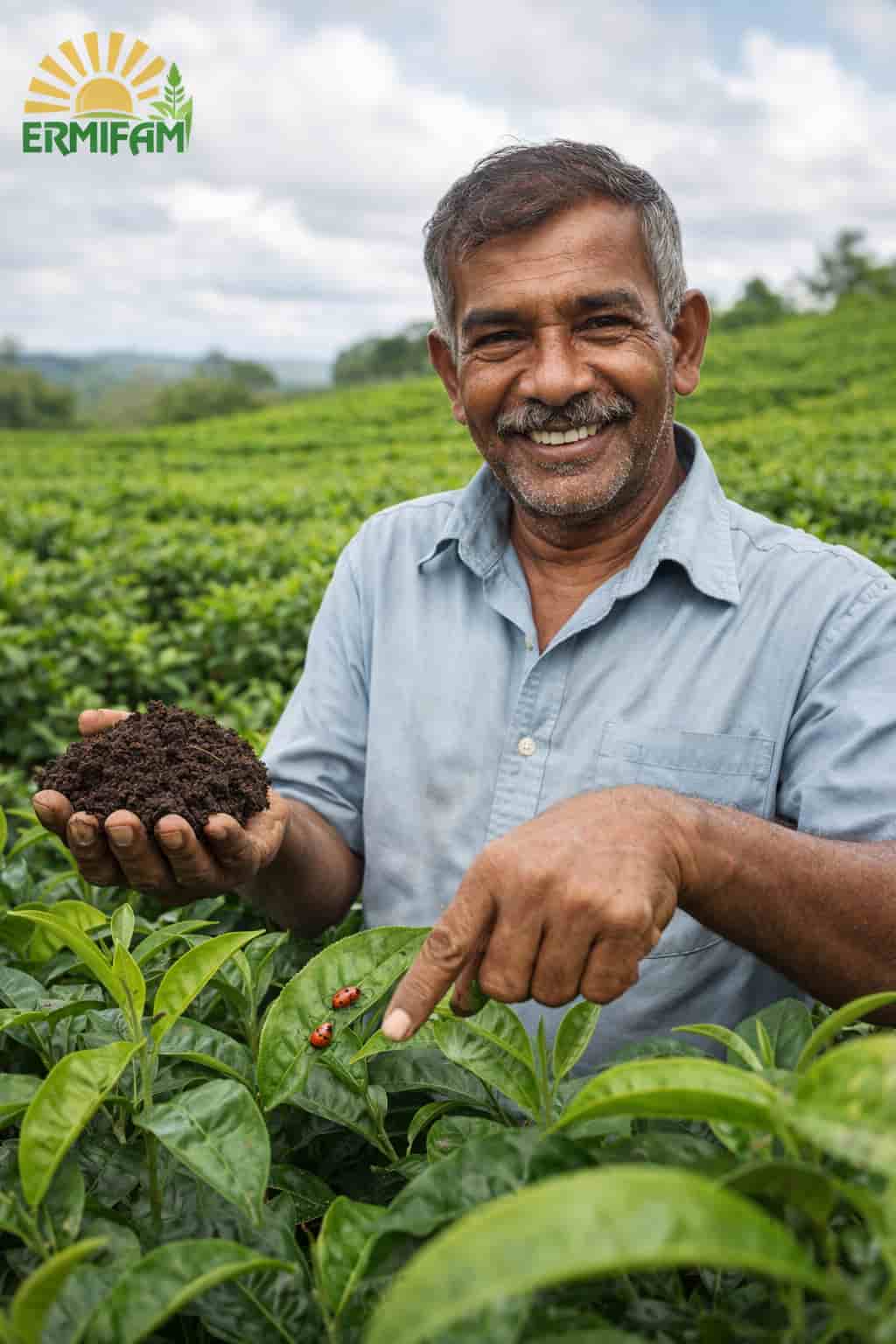

Residue-free Ceylon tea enhancing growth without harmful chemicals offers pure, sustainable exports—discover how Sri Lankan farms achieve premium quality for global markets.
Imagine sipping a cup of tea that transports you to the misty hills of Sri Lanka, where every leaf tells a story of purity and tradition. But what if that same cup carried invisible threats—chemical residues from pesticides that could harm your health? In a world where consumers demand transparency and safety, residue-free Ceylon tea stands out as a beacon of hope, blending ancient wisdom with modern science to enhance growth without harmful chemicals. This isn’t just tea; it’s a revolution in sustainable farming that’s reshaping the global market.
The Hidden Dangers Lurking in Your Teacup
Tea is the world’s second-most consumed beverage after water, long celebrated for its health benefits. Yet conventional farming practices hide a serious problem. In many plantations, synthetic pesticides and fertilizers are used to boost yields and fight pests, leaving residues that can end up in your brew.
Scientific studies published in the Journal of Agricultural and Food Chemistry identify these residues as organophosphates and neonicotinoids—compounds linked to neurological issues, endocrine disruption, and increased cancer risk with chronic exposure.
In Sri Lanka, the home of Ceylon tea, intensive farming has led to soil degradation and water contamination. Farmers, pressured to meet export demands, often overlook long-term consequences. These chemicals don’t just affect consumers; they devastate ecosystems, killing beneficial insects and reducing biodiversity. A 2022 FAO report highlighted how pesticide runoff from Sri Lankan tea estates has polluted rivers, impacting local drinking water and fisheries.
For B2B buyers—wholesalers and retailers—these residues mean regulatory headaches. The European Union enforces strict Maximum Residue Limits (MRLs), rejecting non-compliant shipments and causing millions in losses while damaging brand reputation.
Why Chemicals Are a Ticking Time Bomb
The risks compound over time. Research in Environmental Health Perspectives shows that even low-level pesticide exposure accumulates, potentially weakening immune systems—especially concerning in today’s health-conscious world.
In B2B selling, admitting industry flaws (the pratfall effect) builds trust. Many conventional exporters hide behind vague “organic” claims, but lab tests often reveal inconsistencies.
A powerful case study comes from the Tea Research Institute of Sri Lanka (TRI). In 2018, a pilot in the Uva region switched 50 farmers to bio-pesticides and compost. Yields initially dropped 10%, raising concerns, but by year two, soil health improved, natural pest resistance strengthened, and yields rose 15% above chemical-dependent farms. Water tests showed an 80% reduction in contaminants.
The Solution: Residue-Free Methods for Ceylon Tea
Residue-free Ceylon tea enhances growth through proven, chemical-free practices: integrated pest management (IPM), biological controls, and organic soil amendments.
IPM uses natural predators like ladybugs to control aphids. In Ceylon’s unique high-altitude terroir and volcanic soil, these methods excel. Compost teas boost nutrient uptake by 20–30% (Soil Science Society of America Journal).
For businesses, this positions tea as a premium sustainable product, commanding 25–40% higher margins in Europe and the US while reducing long-term costs.
By 2023, the TRI project expanded to 200 farmers, exporting 500 tons annually with zero residues and Rainforest Alliance certification.
Scientific Simplicity: How Nature Boosts Growth
Tea plants naturally produce defensive compounds like catechins. Chemical inputs suppress this; residue-free farming amplifies it. Mycorrhizal fungi improve water and nutrient absorption, while bio-fertilizers cut synthetic needs by up to 50%.
This isn’t complex—it mirrors natural cycles. For B2B partners, it means consistent quality, fewer rejections, and stronger supply chains.
Real-World Impact and Business Benefits

In Kandy, cooperatives adopted vermicomposting, improving soil structure and delivering 20% higher yields with zero residues in EU tests.
One Colombo exporter partnering with residue-free farms saw EU sales rise 40%, moving from rejected shipments to premium listings.
Embracing the Future with Residue-Free Ceylon Tea
Every sip of residue-free Ceylon tea is pure, backed by science and tradition. It solves residue risks while elevating quality and profitability.
Farmers see higher incomes; communities gain pride; businesses gain trust and market advantage.
Ready to bring pure, premium Ceylon tea to your market?
Contact us today for residue-free export partnership
Frequently Asked Questions
What makes Ceylon tea residue-free?
It uses natural methods like IPM and bio-fertilizers, avoiding synthetic chemicals—verified by independent lab testing.
Is residue-free tea more expensive?
Initial transition costs are higher, but premium pricing and long-term savings make it highly profitable.
How does it benefit the environment?
It reduces pollution, restores soil health, and protects biodiversity—creating a positive legacy.
Can you taste the difference?
Yes—natural growth delivers bolder, cleaner flavors with higher antioxidant levels.
How can my business start importing residue-free Ceylon tea?
Partner with certified suppliers. Contact us for seamless B2B supply and full documentations.
You can contact us to buy and sell this product
Sales consultant
Ways of communication:
 |
09120565945 |
 |
Click |